Bitcoin2026-10-14 10:39:27Saifedean Ammous says Bitcoin could outgrow gold and become less volatileSaifedean Ammous, author of The Bitcoin Standard, said Bitcoin already performs a monetary function when it is held as a store of value. He added that, in his view, Bitcoin’s role is not limited to exchange or payments, but also extends to preserving value in a way that gives it monetary characteristics. Ammous also said he expects Bitcoin to keep maturing over time. As that process continues, he said its overall scale could grow beyond that of gold, while its volatility could fall below gold’s. The remarks were carried by Techub News, which cited Cointelegraph as the source.510
Variant Fund2026-10-02 07:04:13Variant Fund partner says three crypto asset groups could draw the biggest gains if the bull market is just startingVariant Fund investment partner Alana Levin argues that if crypto already put in a bottom sometime in July, the market’s main question has shifted. Instead of asking where the bottom is, investors should now ask whether a real bull market has begun and which projects stand to benefit the most. In her view, the first pool of incremental capital is likely to go to monetary protocols, especially digital store-of-value assets measured against Bitcoin, and to protocols that can actually generate revenue. For the latter group, she expects investors to look more closely at revenue quality, durability, margins, institutional adoption paths, and whether teams proved resilient through the last bear market. Levin also outlines a third category: onchain projects that can be valued against non-crypto businesses, especially those tied to parts of the AI stack such as routers, inference, compute, data collection, and interfaces. She sees many of those as narrative-driven trades rather than long-term investments, and says token value capture remains a key concern where equity and token economics are loosely aligned. More broadly, she argues that some assets never fully entered a bear market this year and may now trade more like traditional assets, with pullbacks in the 10% to 30% range rather than the 90%+ drawdowns seen in earlier cycles.540
Variant Fund2026-10-01 16:40:04Variant Fund partner Alana Levin says crypto likely bottomed at some point in JulyVariant Fund investment partner Alana Levin said in her market outlook for the fourth quarter of 2026 that the crypto market most likely found its bottom at some point in July. She noted that she had written in early July that a bottom appeared to be near, when Bitcoin was at $59,000, Ether at $1,600, and ZEC at $420. In her view, the debate has now shifted away from whether a bottom is in place and toward two questions: whether the bull market is genuinely underway or just a fake move higher, and which projects stand to benefit most in the early stage of a new cycle. Levin said a growing consensus is that marginal capital is most likely to flow into value-storage protocols that function as money and into protocols that generate revenue. She argued that Bitcoin remains the dominant digital store-of-value asset, while other competing assets may be valued by their market-cap ratio to Bitcoin and changes in that ratio. For revenue-generating protocols, she expects investors to focus on whether revenue comes from crypto-native activity such as Pump or traditional finance activity such as Hyperliquid, whether revenue holds up during pullbacks, and what margins look like. She added that projects tied to real-world assets and stablecoin growth, able to attract institutional users, and still led by founders after a bear market may command higher multiples. Levin also grouped onchain projects comparable to non-crypto businesses into a third category and said most of them are narrative trades rather than long-term investments. She listed AI-related themes including routing, inference, compute, data collection, and interfaces, and said if those projects materially outperform, she would read that as a sign the market is nearing a top.600
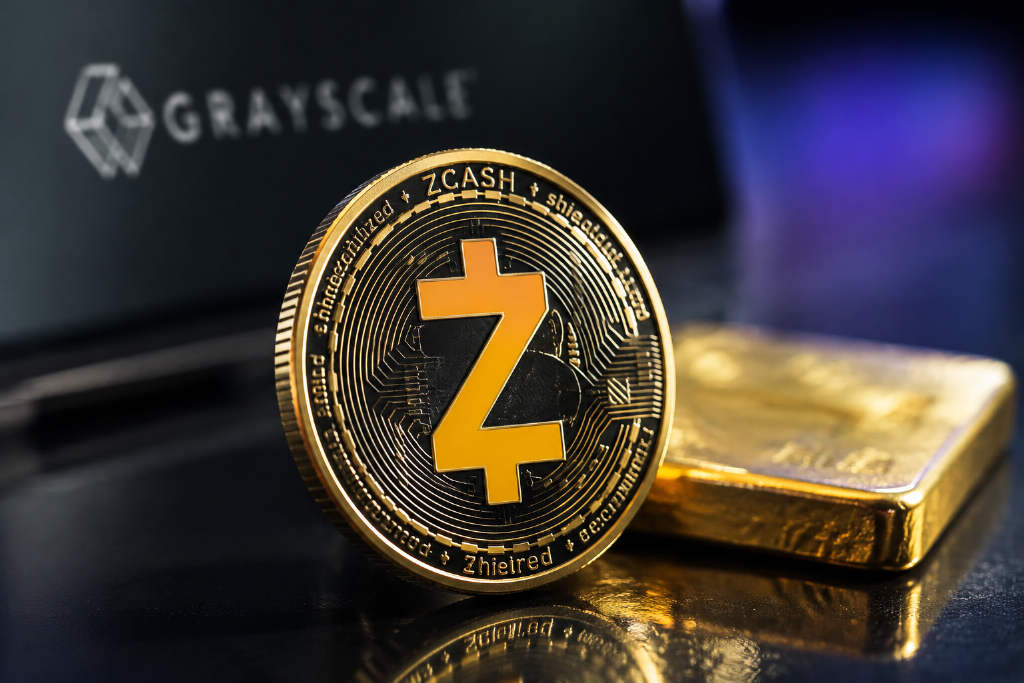
ZEC2026-09-07 23:34:10Taiki Maeda’s ZEC trade review centers on privacy, reflexivity and a concentrated betCrypto trader Taiki Maeda used a roughly 38-minute video to explain why he has placed most of his net worth into ZEC, and why he chose to sell after the Orchard security scare only to buy back at a higher price once the market recovered. His core argument is not simply that ZEC can keep rising, but that Zcash may be moving from the market’s old “privacy coin” label toward a more ambitious role as a privacy-focused store-of-value asset alongside Bitcoin. In Maeda’s framework, ZEC’s price matters because it may help shape fundamentals rather than just reflect them. As the token price rises, the dollar value inside Zcash’s shielded pool also rises, potentially making the privacy set more useful for larger transfers. If that improves adoption, it could strengthen the store-of-value narrative and attract more capital. He also points to Grayscale’s Zcash ETF, which began trading on NYSE Arca on Aug. 25 under the ticker ZCSH, as a new access route for traditional investors, while stressing that listing alone does not prove durable demand. The trade remains highly conditional. Maeda says the thesis depends on continued growth in shielded pool balances, sustained ETF inflows, relative strength against BTC, confidence in supply integrity after the Orchard vulnerability, and broader interest in privacy and quantum security. Without those pieces, the same reflexive dynamic could run in reverse.1160
Ethereum2026-09-07 12:24:06Tom Lee Compares Ethereum to 'Digital Land,' Reframes It as Store of ValueBitmine chairman Tom Lee argues Ethereum (ETH) is more like 'digital land' than cash, with its value anchored in the network's infrastructure as a store-of-value asset. He draws parallels to stocks and real estate for capital preservation. Bitmine has held 5,901,112 ETH as of Aug 30, 2026, about 4.9% of circulating supply, after 65 weeks of consistent accumulation.1110
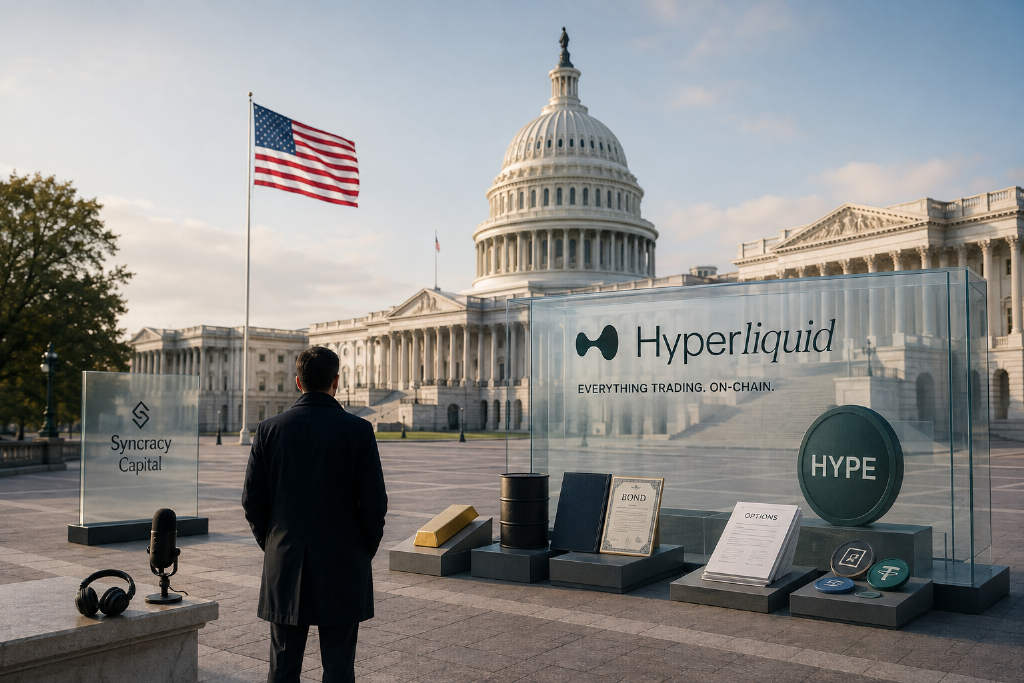
Hyperliquid2026-09-07 06:39:00Syncracy Capital co-founder says HYPE rally is only the start as Hyperliquid pushes toward an onchain market for everythingRyan Watkin, co-founder of Syncracy Capital, used a recent appearance on The Rollup to lay out why he believes Hyperliquid and its token HYPE are still in the early innings. He said one of the biggest overhangs on the project had long been the question of U.S. regulation: strong growth was visible, but investors kept asking what would happen if access to the American market were constrained. In his view, that concern has started to ease after political attention turned directly to Hyperliquid and after Stars-related features had already appeared on public testnet months earlier. Watkin retraced Syncracy’s early thesis, pointing to Hyperliquid’s roughly $3 billion valuation at launch, about $200 million in annualized revenue, and a token acquisition path that required users to bridge funds onto the platform itself. He said the more important benchmark was never just share against onchain rivals, but share captured from centralized exchanges such as BN, Coinbase and Bybit, with the longer-term target extending even to incumbent financial venues like CME. He also argued that Hyperliquid’s roadmap now points beyond perpetuals. With portfolio margin, spot markets, HIP-3 and regulated frameworks around HIP-3 and HIP-4, he described the platform as moving toward a unified venue where users can post mainstream assets as collateral and trade a wide range of financial products on a single permissionless ledger.1220
Hyperliquid2026-09-07 06:41:08Syncracy Capital co-founder says HYPE’s rally is only the start as Hyperliquid pushes toward an onchain market for everythingRyan Watkin, co-founder of Syncracy Capital, used a long-form appearance on The Rollup to lay out why he still sees Hyperliquid and HYPE in the early innings, even after a sharp run-up that followed Donald Trump’s public mention of the project. Watkin said HYPE moved from about $59 to near $70 while he was on a call with co-founder Dan, before the team realized the move had coincided with Trump referencing Hyperliquid on live television. He argued that the larger story is not a one-off price spike, but the removal of what many investors had treated as the platform’s biggest overhang: uncertainty around U.S. regulatory access. Watkin walked through how his thesis evolved from a relatively simple valuation case — roughly a $3 billion valuation against about $200 million in annualized revenue — into a broader bet on Hyperliquid becoming a permissionless venue where users can post nearly any major asset as collateral and trade nearly any financial instrument. He said the indicators that matter most are share gains against Binance, Coinbase and Bybit, penetration into global CFD, futures and options volume, growth in net protocol income, and trends in net deposits and average onchain account equity. He also argued that crypto investing is splitting between cash-flow-producing onchain businesses and winner-take-most stores of value, while transparent ledgers and creator incentives are turning social trading into a native product category rather than a passing speculative fad.1280
Bitcoin2026-08-28 05:34:36Grayscale Research Head: Bitcoin-Gold Correlation Tops 50% as Nasdaq 100 Link EasesGrayscale head of research Zach Pandl said on X that Bitcoin's 90-day correlation with gold has surged from near zero to above 50%, while its correlation with the Nasdaq 100 has dropped to roughly 33% from more than 60%. Pandl described this as the return of the "debasement trade," with Bitcoin increasingly viewed as a store of value rather than a pure tech risk asset. The analysis was shared via WuBlockchain and reported by Techub News.1430